A Public API for the Data Your Team Already Uses
Read and write your records from any other system over a REST API, under the same permissions your team has.
No screen scraping, and no hidden internal endpoints.
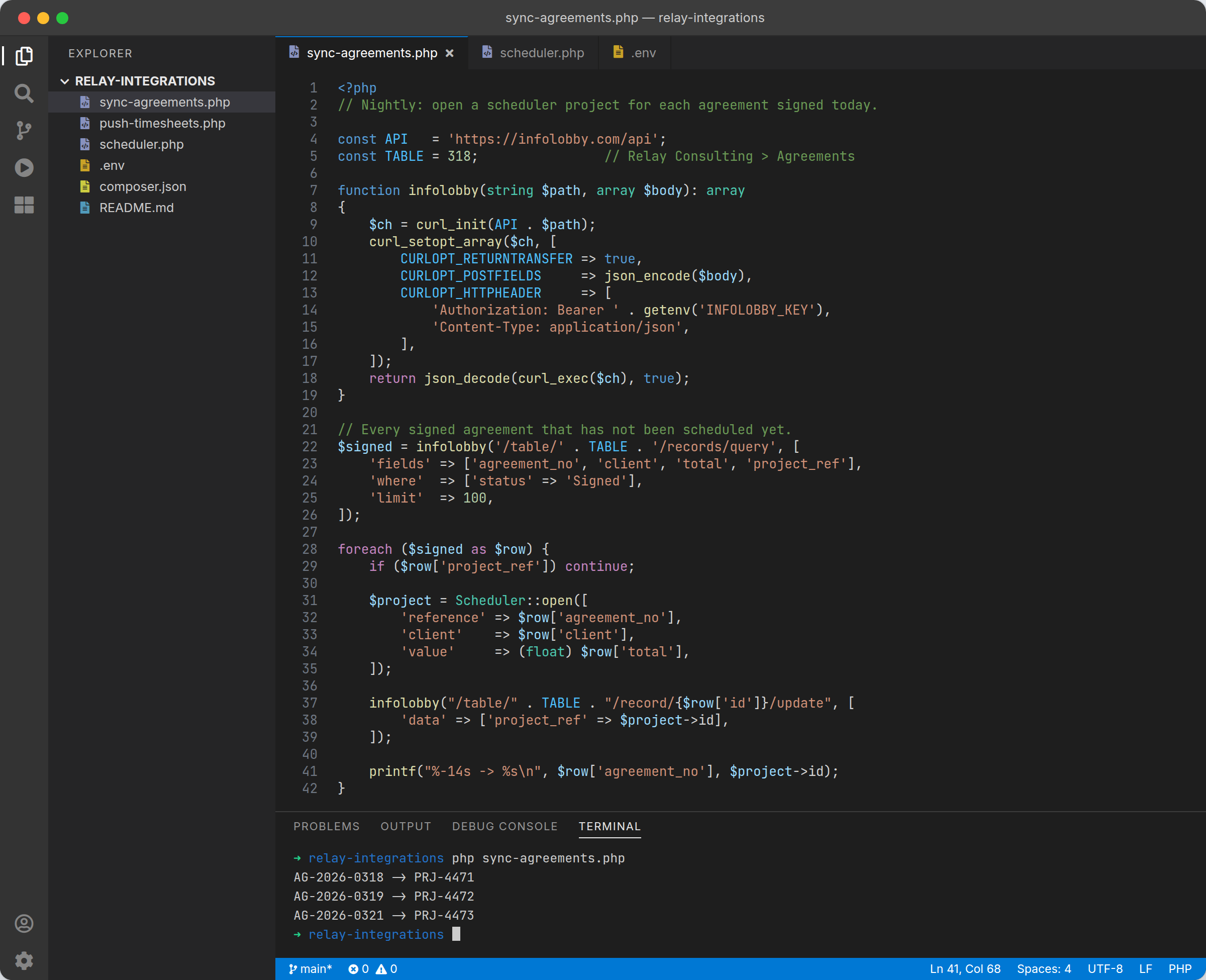
Your data should not be harder to reach than somebody else's
Plenty of no-code products keep the useful endpoints private and give you an export button instead. So the integration you need turns into a scheduled CSV, or a scraper, or a support ticket asking whether there is an endpoint for this.
InfoLobby publishes the same operations its own interface uses: spaces, tables, records, comments, files and tasks, over ordinary HTTP. A key is scoped to the workspaces you choose, can be made read-only, and can be pinned to an IP range. Whatever it does shows up in the record history the same way a person's edits do.
The API should extend the system, not create a shadow system.
When external tools need access, direct database credentials are tempting but messy. InfoLobby's API gives integrations a public surface while internal users keep working in the app against the same records.
- Use bearer tokens with workspace-aware access
- Work with records, comments, files, tasks, spaces, and tables
- Keep external writes inside the same operational trail
What the API covers
- Create and manage spaces, tables, records, comments, files, and tasks
- Connect external apps without custom DB access
- Connect Claude or ChatGPT directly to your workspaces, with per-workspace consent and one-click revocation
- Use the same platform for both internal work and system integrations
- Pair API usage with audit history and automations inside the app
Getting an integration running
- Create an API key with the workspace access and restrictions the integration actually needs.
- Use public endpoints for spaces, tables, records, comments, files, or record-scoped tasks.
- Keep internal users in the app while external systems read or write the same operational data through HTTP.
Where it fits
Use it for
- Teams that need external systems to safely read or write InfoLobby data
- Customer portal bridges, reporting pipelines, sync jobs, and custom scripts
- Integrations that should respect workspace access rather than raw database credentials
Reach for something else when
- Developers who only want direct SQL access to a hosted database
- Public consumer APIs where InfoLobby is not the system of record
Questions people ask
What can the public API manage?
Core endpoints cover spaces, tables, records, comments, files, and tasks, with authentication and rate limiting built in.
Is the public API separate from internal ajax endpoints?
Yes. Public data operations use dedicated API endpoints rather than app-only ajax calls, which makes integrations more stable and explicit.
Can I connect Claude or ChatGPT to my data?
Yes. InfoLobby runs a remote MCP server that you add as a connector in Claude or ChatGPT. You sign in, choose which workspaces to share, and approve. No API key to paste. The connection acts as you, so it only reaches data you can already reach, and you can revoke it at any time from Account, Connected Apps.
Try it on your own data
Start free and build one working process around this feature, then add the records, views, tasks and automations around it.